A Brief History Of Http Methods
40 HTTP methods?
Since the new http methods QUERY was published a few days back, I just tried to read about it and somehow ended up in a rabbit hole. I thought I knew http, but it turns out, I barely touched it :-P.
You may not believe, but there are a total of 40 http methods as per the RFC.
https://www.iana.org/assignments/http-methods/http-methods.xhtml
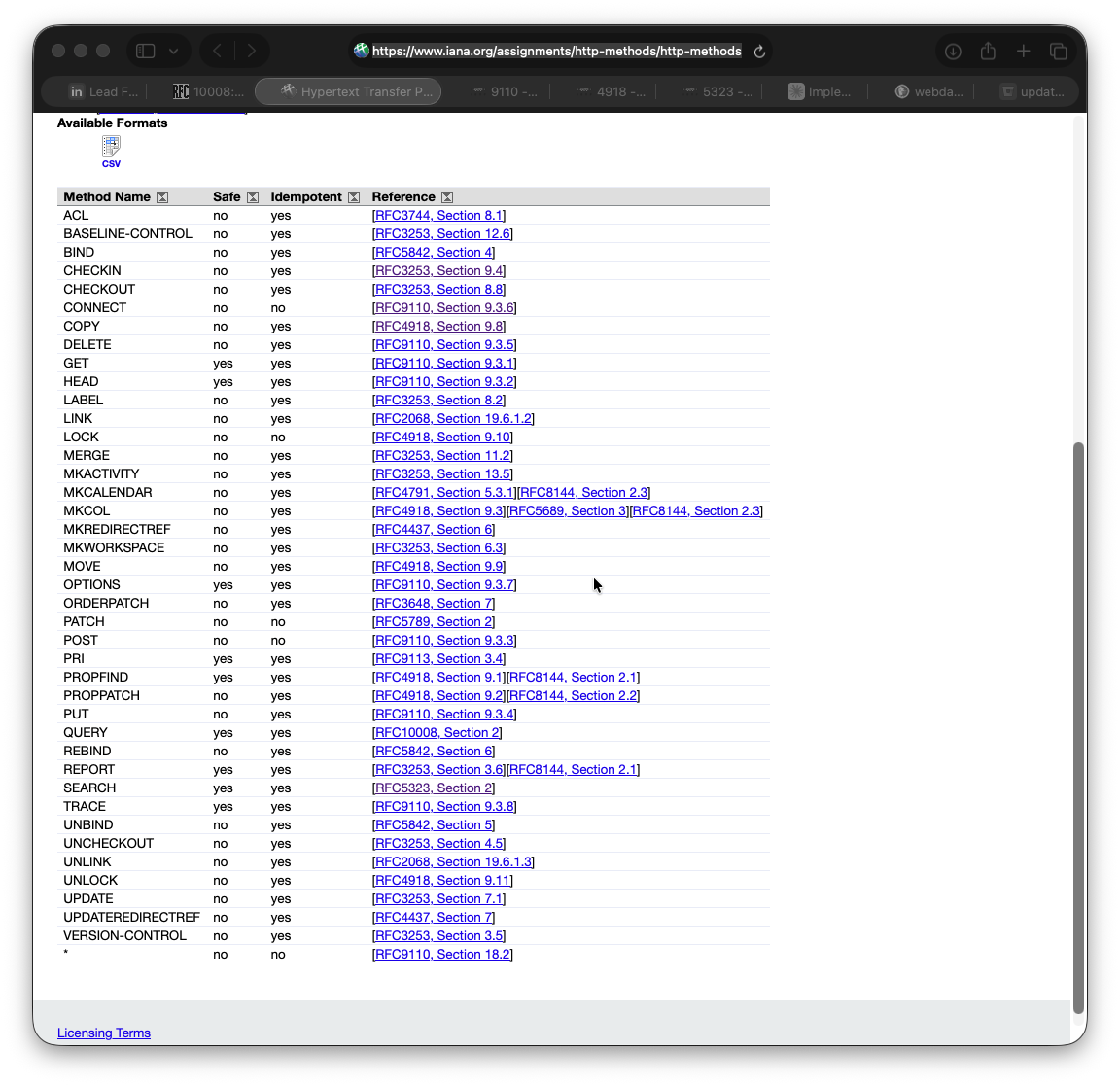
Since generally developers are application developers primarily working on rest apis, you would may be familiar with GET, PUT, POST, PATCH etc. But lets have a quick rundown and see why so many are there and is anyone using them?
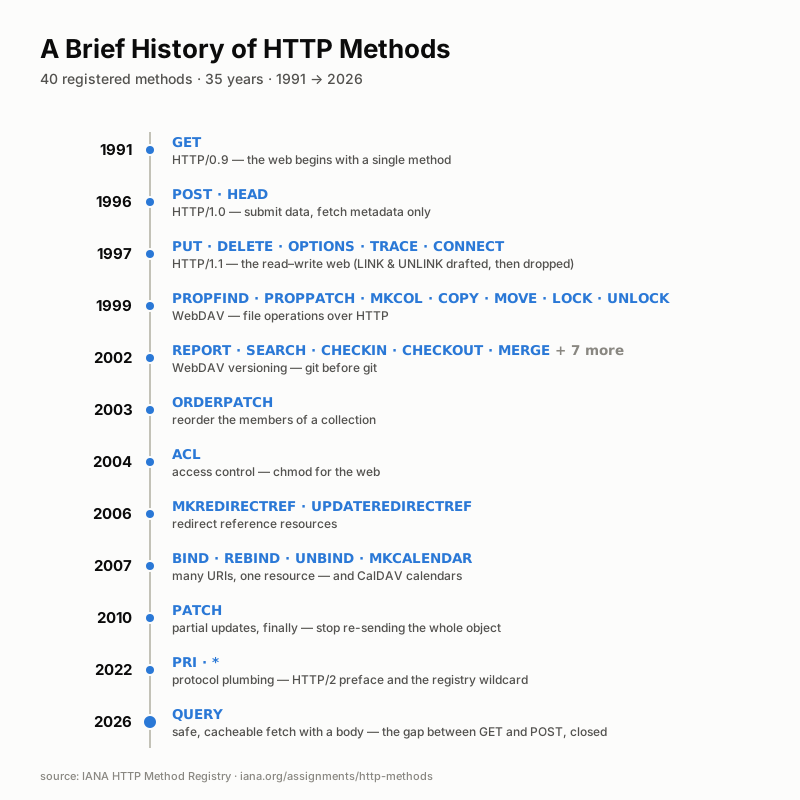
1991-1996
GET, HEAD and POST
When the web started, I suppose it was only two things needed. Read the data from server and then submit something to the server.
Initally with http 0.9 only GET was there. With http/1.0 they added POST and HEAD
While GET and POST are obvious, HEAD was added to get only the metadata of resources. I asume for optimization?
1997-1999
PUT and DELETE were added to give clients a way to create/replace and remove resources directly making http complete tool for managein gcontent rahten than just reading.
OPTIONS was added so that client can discover what a server supports.
TRACE was added for diagnostic loopback
CONNECT was added for proxy to open a tunnel
Link and Unlink were present in draft but dropped from later revisions. They remain registered but are effectively obsolete.
LINK - Establish relationship between existing resources
UNLINK - To remove the links
Both were removed from RFC 2616 onward
1999
They wanted to achieve content authoring using http methods thus they (WebDAV - Web Distributed Authoring and Versioning) came up with below methods
PROPFIND - Read resource
PROPPATCH - Write resource property
MKCOL - Make a directory or collection
COPY - Create a copy of resource
MOVE - Move a resource from one place to another
LOCK - Lock a resource
UNLOCK - Obviously :-D, Unlock a resource
Basically all file operations to make the content management easier. While this looks good on the surface but somehow it didn’t get the traction.
I wasn’t even aware till today that these methods existed. And I am sure 90% of the web deverlopers won’t know this
2002
REPORT was added for server side reporting queries in versioned WebDAV systems
SEARCH was added as a safe idempotent way to run serv-side quries carrying XML query document in the body. Both were safe and idempotent but tied to XML and thus never gained much traction. As I believe people moved to JSON and abandorned xml thereby leaving these methods behind.
I also read that initially QUERY method was supposed to be named this, but it would have resulted in incompatibility as the existing standard supports only xml and extending something else will destroy the backward compatibility.
Apart from this, there were several added by WebDAV to support versioning. Basically a CVS kind of thing.
VERSION-CONTROL - Adds a resource to version control. Maybe similar to git add -u to add the untracked file?
CHECKOUT - Create a working copy that you can modify
CHECKIN - Same as git commit
UNCHECKOUT - Cancel a checkout. Looks to be similar to git checkout
UPDATE - Looks like a git pull. Pulls a different revision into view
LABEL - I feel its same as git tag. Puts a human readable name
MERGE - Obvious
BASELINE-CONTROL - Puts whole colleciton under baseline control - snapshot the state of many resources together. Not sure exactly but need to check whats the git equivalent for this
MKWORKSPACE - Create a workspace where you can checkout files. mkdir I suppose in git?
MKACTIVITY - Creates an activity. Something similar to changeset. Maybe I guess something like git add?
2003
ORDERPATCH - To change the order of members in a collection.
2004
ACL - Modifies the access control list of a resource. I guess chmod of internet
2006
RFC 4437
MKREDIRECTREF - creates a redirect reference resource pointing at another URI. I suppose the location header that we get when we call a GET method
UPDATEREDIRECTREF - Updates the redirect reference.
2007
RFC 5842
Creating new URIs to the same existing resource
BIND - Creates an additional binding(a new URI) to an existing resource
REBIND - Moves a binding from one colleciton to another
UNBIND - Removes a binding
2007
RFC 4791
MKCALENDAR - create a new calendar colection used by CalDAV calendar servers ( protocol behind many shared calendar systems)
2010
PATCH was added to fill the gap. PUT replaced the whole object which is a waste of resources when you really just want to change one small detail.
2022
PRI - Not a real appplication method. Its part of the HTTP/2 connection preface magic string used to detect and reject accidental http/2 traffic on http/1.1 servers. It exists in the registry to reserve the token, but as a developer you never call it.
RFC 9110
* - The star!. Its just reserved to complete the list when we use headers like access-allow-methods:*
2026
QUERY is now added to close the gap between GET and POST. We already know GET becomes heavey when we start writing query parameters for our data. While there is a sufficient limit to characters in URI, but it makes every URI call a different resource plus the overhead of logging and parsing in proxies. So the newly added methods really gives a good capability which was missing. And POST (used by GraphQL) isn’t safe and cacheable makes it a pain for simple data fetching.
End